‘Don's Dawn’, from New York Eye and Ear Control (1964), by Albert Ayler, Don Cherry, John Tchicai, Roswell Rudd, Gary Peacock & Sunny Murray.


Courtesy of Juno Records.
‘Don's Dawn’, from New York Eye and Ear Control (1964), by Albert Ayler, Don Cherry, John Tchicai, Roswell Rudd, Gary Peacock & Sunny Murray.
Courtesy of Juno Records.
Intolerable: reading about other men's despair makes my despair more tolerable.
Great men's great despair against my measly little one.
A "loneliness that is experienced together" (Blanchot). And the observation, still by Blanchot, that whoever uses the phrase "I am alone" is necessarily comical.
I have no idea who first "used" the line "this loneliness won't leave me alone", but at least Otis Redding used it, before many others, such as the band Portishead.
Depressive realism plus narcissism: I don't deserve myself.
A moment later, taking up Kafka's diaries, I come across these two subsequent notes ("Das dritte Oktavheft", Nov. 21, 1917):
Das Böse weiß vom Guten, aber das Gute vom Bösen nicht.
Selbsterkenntnis hat nur das Böse.
After another moment, this one (Jan. 14, 1918):
Es gibt nur zweierlei: Wahrheit und Lüge.
Wahrheit ist unteilbar, kann sich also selbst nicht erkennen; wer sie erkennen will, muß Lüge sein.
Emmanuel Levinas dismisses the metaphor of rootedness:
L’homme, après tout, n’est pas un arbre et l’humanité n’est pas une forêt.↓
For Levinas, the “notion of Israel” is not coextensive with the historical, geografical or geopolitical borders of the state of Israel. His “essays on judaism” actually provide a strong argument against the political misuse of the name of Israel. For judaism, in contrast to what a certain “great contemporary philosopher” teaches about rootedness and the world, it is not the “houses, temples and bridges” that let the world become intelligible, but the face of the other;↓ to put it briefly, being-with-others rather than being-in-the-world.
L’homme commence dans le désert où il habite des tentes, où il adore Dieu dans un temple qui se transporte.↓
In the Talmud, Levinas maintains, the notion of Israel remains separate from all historical, national, local and racial determinations. This separation implies a freedom with regard to all landscapes and architectural monuments, all “these heavy and sedentary things that one is tempted to prefer to human beings”. With respect to this freedom, rootedness (enracinement) becomes secondary, compared with other forms of fidelity and responsibility; other more vast horizons than the village and a given human society emerge for the vision that presupposes a conscious engagement.↓
Le judaïsme est une extrême conscience.↓
The extreme nature of this conscience – both consciousness and moral conscience – is, to use words that Derrida might use to counter-sign Levinas, a confrontation with aporia, a desert kind of pathlessness, and the undecidable.
Même lorsque l’acte est raisonnable, lorsque l’acte est juste, il comporte une violence. […] Voilà aussi pourquoi l’engagement nécessaire est si difficile au juif, voilà pourquoi le juif ne peut pas s’engager sans se désengager aussitôt, voilà pourquoi il lui reste toujours cet arrière-goût de violence, même quand il s’engage pour une cause juste […]↓
« Alors que la vie ordinaire précède le récit que l’on peut en faire, j’ai parié qu’une certaine vie n’est ni antérieure, ni extérieure á écrire » — Roger Laporte
A multivalent, multicultural society should not be structured like a honeycomb whose cells are isolated one against the other, so that none of the individual or group-related values gets challenged, but a society with a multitude of values that are subject to debate and exchange, a multitude of cultures that are exposed to the influence of each other, a society that is subjected to nothing else than the radical idea of a “democracy to come”.

"Muqarnas are stalactite or honeycomb ornament that adorn cupolas or corbels of a building." A Year in Fez — The photo was found through an image search with the terms arabesque honeycomb commons
"... l'amitié, elle aussi, tend à devenir totalitaire." (Jean-Paul Sartre)
This tendency towards a "totalitarianism" or totalisation, even in questions of friendship, is something I don't quite approve of in Sartre. I don't think he's joking in his rather brutal reply to Camus.
An account — travelogue — of my recent sentimental journey through Schwaben and Schwarzwald was published in the online journal Mustekala on 12-12-12, both in Finnish and in English, as slightly different versions.

« Aucun oiseau n’a le cœur de chanter dans un buisson de questions. » (René Char)
»Kein Vogel, der singen möchte in einem Gebüsche von Fragen.« (Nachgedichtet von Paul Celan)
“No bird has the heart to sing in a thicket of questions.” (Translated by Susan Sontag)
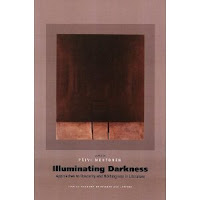
"'Schreiben als Form des Gebets': An Impossible Form of Apostrophe? : 'P. S' on a fragment by Kafka as adopted by Celan." My article with that impossible title is also online now (PDF, 6 MB). It appeared five years ago in the volume edited by Päivi Mehtonen, Illuminating Darkness: Approaches to Obscurity and Nothingness in Literature (Helsinki: Finnish Academy of Science and Letters, 2007), 187–207.
The article contains, as its most important ingredient, my reading of Celan's poem "Wirk nicht voraus", different from another discussion of the same poem in my doctoral dissertation (see below) and more detailed.

*Jean-Jacques Rousseau, Rousseau juge de Jean-Jaques [sic]. Dialogues, texte présenté par Michel Foucault (Paris: Librairie Armand Colin, 1962), 156.

Counter-figures: An Essay on Antimetaphoric Resistance. Paul Celan's Poetry and Poetics at the Limits of Figurality (diss., 2007, 398 pp.) is now available also via Google Books, free of charge.
This video gets stuck at 1m56s at its original address; let's see if it streams better as embedded... It appears to do so!
I was just listening to Peeter Uuskyla and Peter Brötzmann's wonderful duo album, Born Broke, and went YouTubeing for more of Uuskyla's drumming.
Beauty itself is either
The good itself is either
But why "either – or"? Why not "both – and"?

Cf. René Magritte's painting Ceci n'est pas une pomme
.
The font is Type-Ra by Junkohanhero.
This quote
from Magritte was inspired by the exhibition – which I've so far only read about – Text Art – Poetry for the Eye in Tampere, Finland.
See also my blog in Finnish.


